
 English
 中文简体
 русский
 Français
 Español
 عربى
 CONTACT US


Carbon Molecular Sieve for High-Performance PSA Nitrogen Generation
2026-11-14
Content
- 1 What Carbon Molecular Sieve Does in a PSA Nitrogen Generator
- 2 Product Series for Different Nitrogen Requirements
- 3 Key Advantages of the Carbon Molecular Sieve Series
- 4 Manufacturing Strengths and Process Control
- 5 Comparison with Less-Consistent Carbon Molecular Sieve
- 6 Operating Conditions That Protect Performance
- 7 Applications Across Multiple Industries
- 8 Selection Guidance for Buyers and Equipment Manufacturers
- 9 Why Integrated Manufacturing Matters
- 10 Frequently Asked Questions
- 10.1 What is carbon molecular sieve?
- 10.2 What is the difference between CMS-240, CMS-260, CMS-280, and CMS-330?
- 10.3 Can carbon molecular sieve produce 99.999% nitrogen?
- 10.4 Why is air drying important?
- 10.5 What happens if oil enters the adsorption tower?
- 10.6 What adsorption pressure is recommended?
- 10.7 How does temperature affect CMS performance?
- 10.8 How long can carbon molecular sieve last?
- 10.9 Why should CMS be tested in a nitrogen generator before shipment?
- 10.10 Is a higher CMS grade always the best choice?
- 10.11 How should CMS be stored?
- 10.12 Can the product be customized?
- 11 Conclusion
- 12 References
- 13 Product: Carbon Molecular Sieve (CMS)
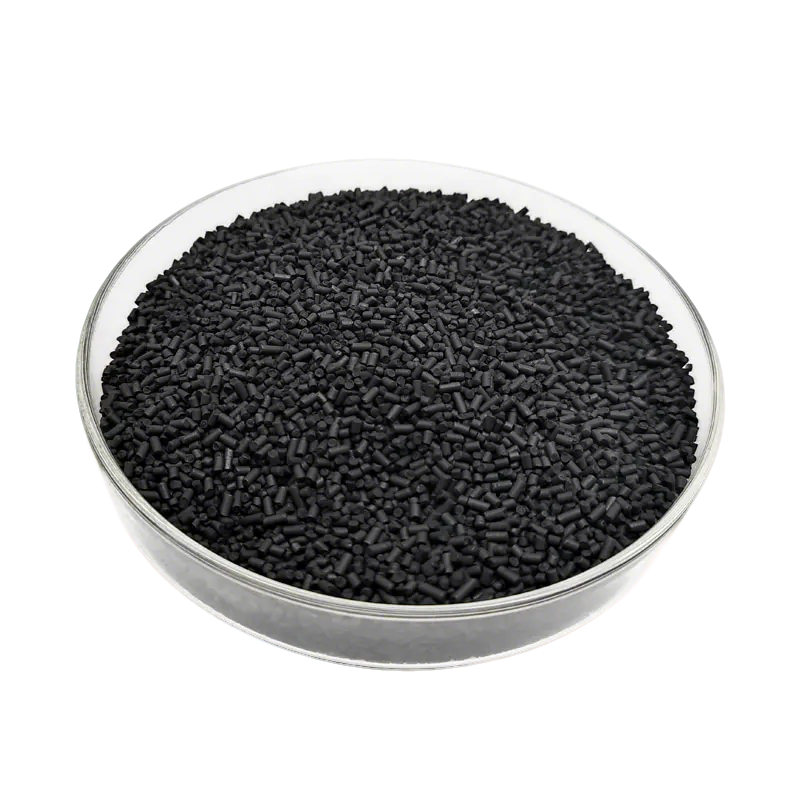
Carbon molecular sieve is the essential adsorbent used in pressure swing adsorption nitrogen generators. By selectively adsorbing oxygen, carbon dioxide, moisture, and other components of compressed air while allowing nitrogen to pass through, it enables the production of nitrogen with adjustable purity and flow. The quality of the carbon molecular sieve directly affects nitrogen recovery, energy consumption, production capacity, operating stability, and adsorbent service life.
Modern nitrogen-generation systems require more than a material with a high adsorption capacity. The adsorbent must also have a carefully controlled pore structure, suitable particle strength, low dust generation, stable performance under repeated pressure cycles, and consistent quality from batch to batch. These requirements are particularly important in industrial applications where a nitrogen generator operates continuously and even small changes in adsorbent performance can increase operating costs.
CMS-240, CMS-260, CMS-280, and CMS-330 carbon molecular sieves are designed for PSA nitrogen generators with different requirements for nitrogen purity, gas production, air consumption, and overall system efficiency. The series provides options for applications ranging from general inerting and food packaging to electronics, pharmaceutical production, metal heat treatment, chemical processing, and oil and gas operations.
Produced by Anhui Zhuoxu New Material Technology Co., Ltd., the carbon molecular sieve series is supported by integrated porous-carbon material production, continuous manufacturing equipment, product testing in nitrogen-generation systems, ISO 9001 quality management, and ongoing cooperation in carbon-material research and development. These capabilities help connect material design with actual PSA operating performance.
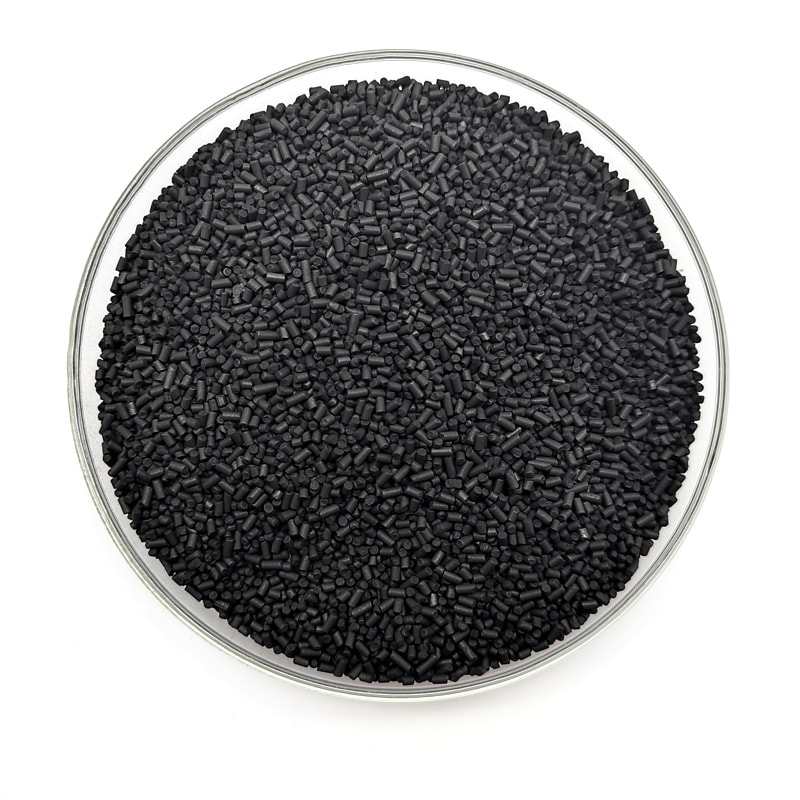
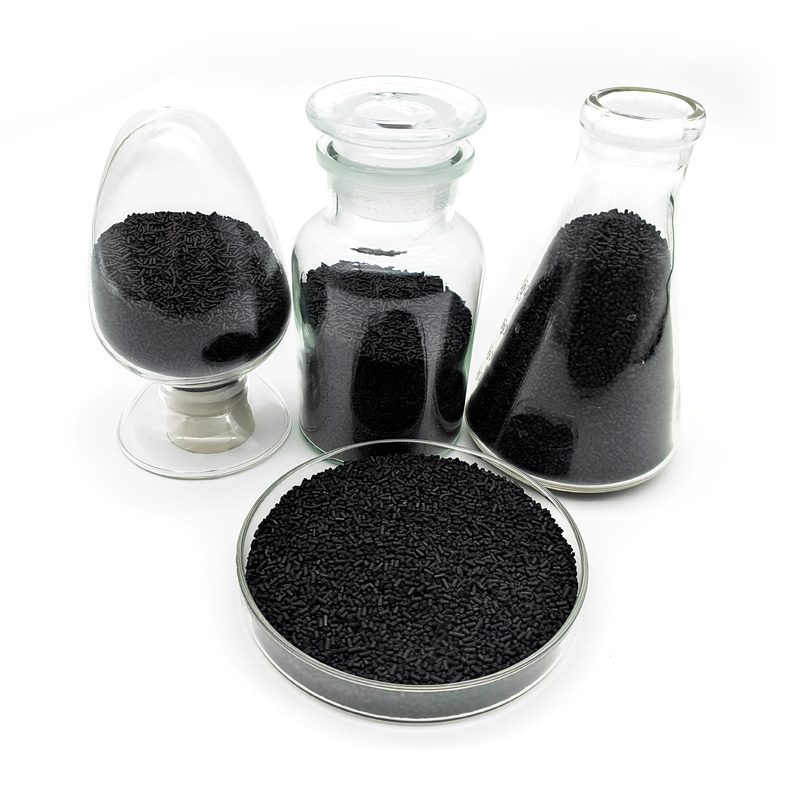
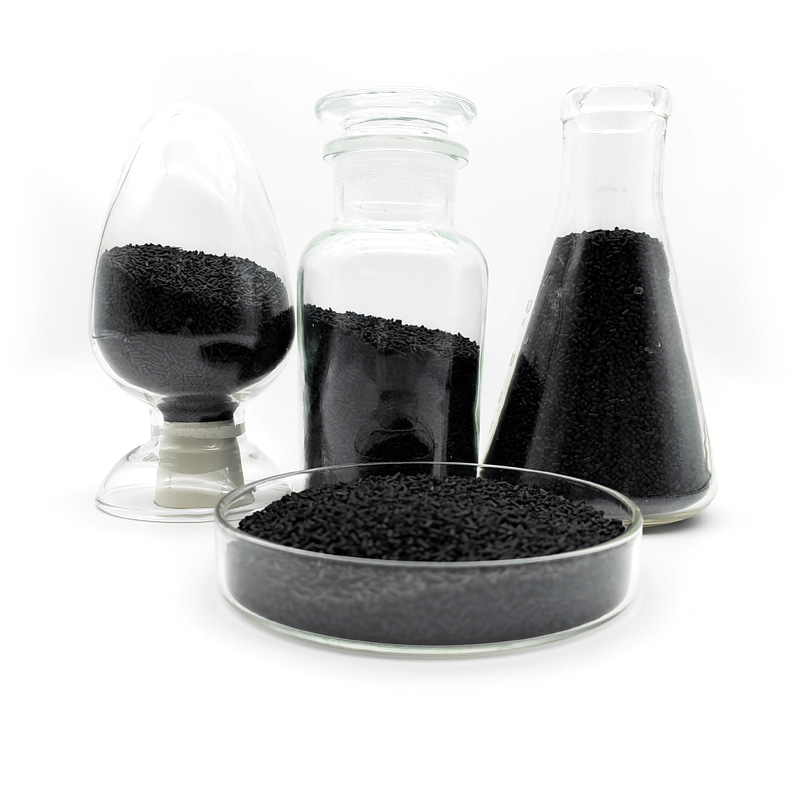
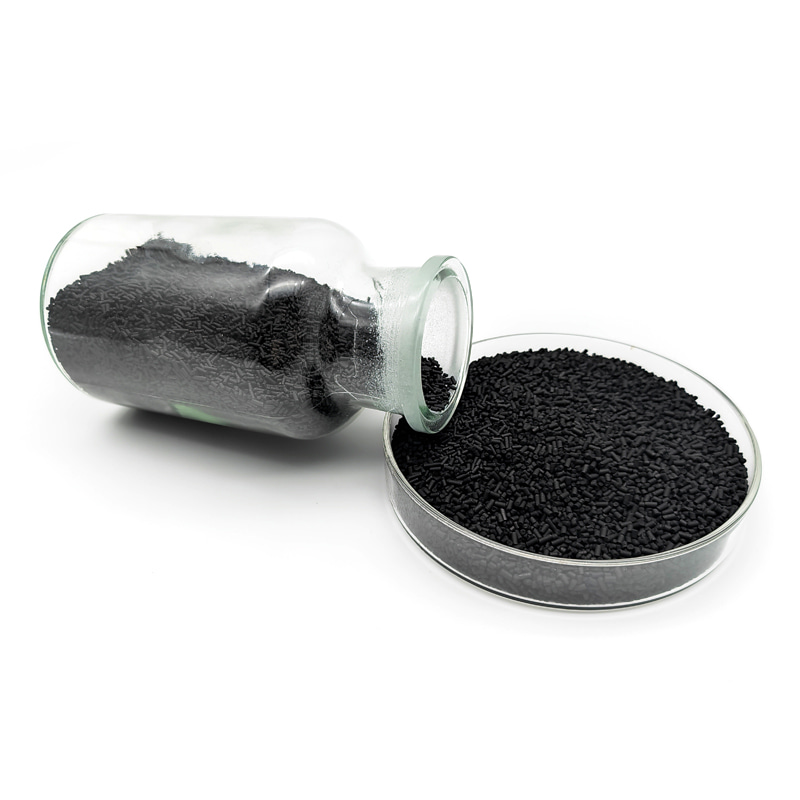
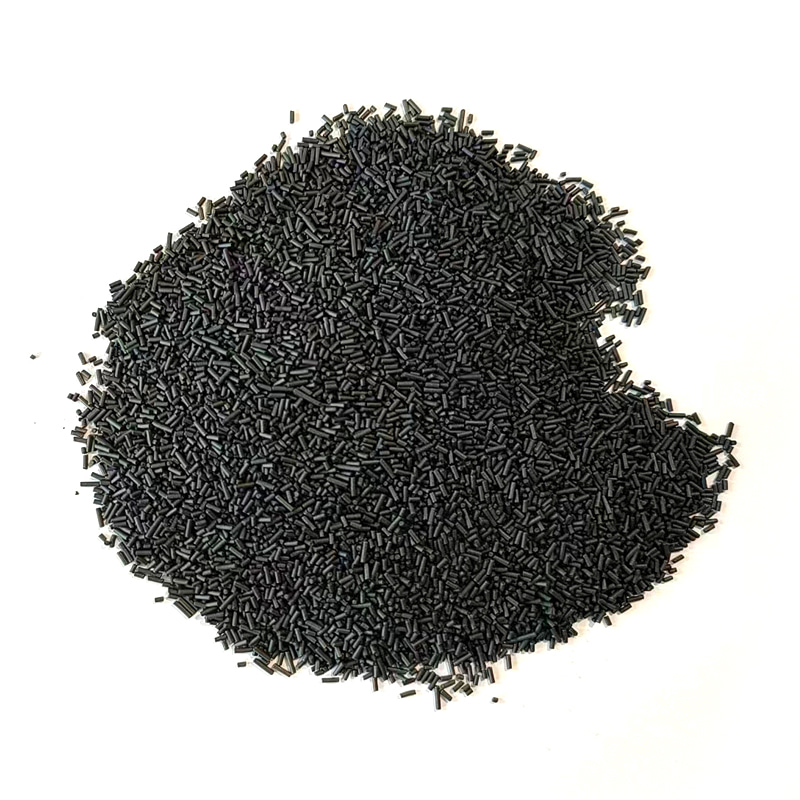
Carbon Molecular Sieve (CMS)
What Carbon Molecular Sieve Does in a PSA Nitrogen Generator
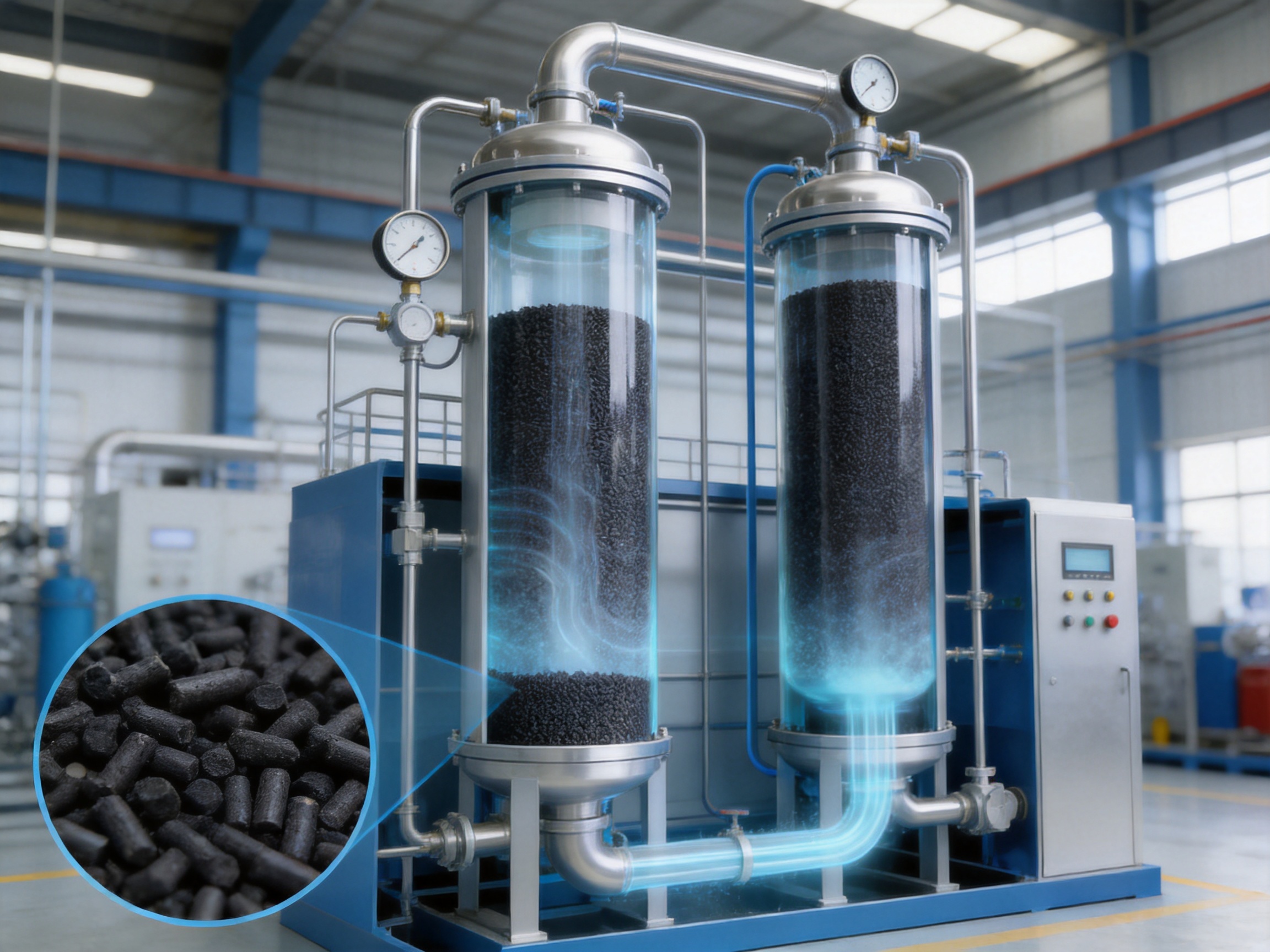
Air is composed mainly of nitrogen and oxygen, together with smaller quantities of argon, carbon dioxide, water vapor, and trace gases. In a PSA nitrogen generator, compressed air is directed into one or more adsorption towers filled with carbon molecular sieve. Under pressure, the carbon molecular sieve adsorbs oxygen more rapidly than nitrogen. Nitrogen therefore leaves the adsorption tower as the product gas, while oxygen-rich gas and other adsorbed components are removed during regeneration.
A typical PSA cycle includes adsorption, pressure equalization, depressurization, regeneration, and repressurization. While one tower produces nitrogen, another tower is regenerated. Multiple towers operate in a coordinated sequence to provide a continuous nitrogen supply.
The performance of the adsorbent depends on the interaction between its micropore structure and the kinetic diameter of gas molecules. Carbon molecular sieve is not simply a conventional activated carbon. Its pore-size distribution is engineered so that oxygen can diffuse into the micropores more rapidly than nitrogen. This kinetic selectivity is the foundation of oxygen-nitrogen separation.
The approximate pore-size range of carbon molecular sieve used for nitrogen generation is commonly described as being around 0.28 to 0.38 nanometers. Uniformity within this range is important. If the pores are too large, nitrogen adsorption may increase and product purity may decrease. If the pores are too small or insufficiently accessible, oxygen diffusion and production capacity may be reduced.
For this reason, the best carbon molecular sieve is not necessarily the material with the largest total surface area. A practical PSA adsorbent must balance pore accessibility, oxygen selectivity, adsorption capacity, particle strength, regeneration behavior, and resistance to attrition.
Product Series for Different Nitrogen Requirements
The CMS-240, CMS-260, CMS-280, and CMS-330 models are intended to cover a broad range of PSA nitrogen-generation conditions. The model numbers represent different performance levels within the product range. In general, higher-grade models provide greater nitrogen production under comparable conditions, although the final result depends on operating pressure, purity target, cycle design, air pretreatment, tower dimensions, and control settings.
At a typical adsorption pressure of 0.75 to 0.80 MPa, the product series can be selected according to the required nitrogen purity and flow rate. A system designed for 99.999% nitrogen purity will normally require a lower production rate and a higher air-to-nitrogen ratio than a system designed for 99.5% or 99% purity. This is a normal characteristic of PSA separation: higher purity requires more selective operation and usually increases specific air consumption.
| Model | Adsorption Pressure | Nitrogen Purity | Production Rate | Air-to-Nitrogen Ratio |
| CMS-240 | 0.75–0.80 MPa | 99.999% | 70 Nm³/h·t | 6.5 |
| CMS-240 | 0.75–0.80 MPa | 99.99% | 110 Nm³/h·t | 4.6 |
| CMS-240 | 0.75–0.80 MPa | 99.9% | 165 Nm³/h·t | 3.6 |
| CMS-240 | 0.75–0.80 MPa | 99.5% | 240 Nm³/h·t | 2.6 |
| CMS-240 | 0.75–0.80 MPa | 99% | 290 Nm³/h·t | 2.3 |
| CMS-260 | 0.75–0.80 MPa | 99.999% | 80 Nm³/h·t | 6.4 |
| CMS-260 | 0.75–0.80 MPa | 99.99% | 120 Nm³/h·t | 4.5 |
| CMS-260 | 0.75–0.80 MPa | 99.9% | 175 Nm³/h·t | 3.5 |
| CMS-260 | 0.75–0.80 MPa | 99.5% | 260 Nm³/h·t | 2.5 |
| CMS-260 | 0.75–0.80 MPa | 99% | 305 Nm³/h·t | 2.2 |
| CMS-280 | 0.75–0.80 MPa | 99.999% | 90 Nm³/h·t | 6.2 |
| CMS-280 | 0.75–0.80 MPa | 99.99% | 135 Nm³/h·t | 4.2 |
| CMS-280 | 0.75–0.80 MPa | 99.9% | 195 Nm³/h·t | 3.3 |
| CMS-280 | 0.75–0.80 MPa | 99.5% | 280 Nm³/h·t | 2.3 |
| CMS-280 | 0.75–0.80 MPa | 99% | 335 Nm³/h·t | 1.9 |
| CMS-330 | 0.75–0.80 MPa | 99.999% | 100 Nm³/h·t | 6.2 |
| CMS-330 | 0.75–0.80 MPa | 99.99% | 170 Nm³/h·t | 4.0 |
| CMS-330 | 0.75–0.80 MPa | 99.9% | 250 Nm³/h·t | 3.3 |
| CMS-330 | 0.75–0.80 MPa | 99.5% | 330 Nm³/h·t | 2.3 |
| CMS-330 | 0.75–0.80 MPa | 99% | 360 Nm³/h·t | 1.9 |
The values in the table are reference performance data for comparison and selection. Actual performance may vary with compressor condition, air pretreatment, adsorption-tower design, cycle time, product-gas pressure, ambient temperature, and the control strategy of the nitrogen generator. A complete engineering evaluation should be performed before final model selection.
Key Advantages of the Carbon Molecular Sieve Series
Selective Oxygen-Nitrogen Separation
The principal advantage of carbon molecular sieve is its selective adsorption behavior. Oxygen molecules diffuse into the micropores more readily than nitrogen molecules. This enables nitrogen to be separated from compressed air without cryogenic equipment or chemical absorbents.
A uniform micropore structure supports stable separation. The more consistent the pore network, the more predictable the relationship between pressure, cycle time, gas purity, and production capacity. This is especially valuable for nitrogen generators that must maintain a specified oxygen concentration over long operating periods.
The CMS series is designed around the requirements of PSA oxygen-nitrogen separation. Its performance is therefore evaluated not only through laboratory adsorption data but also through operation in nitrogen-generation equipment. Testing in an actual generator helps confirm whether the material performs effectively under cyclic pressure conditions.
High Adsorption Capacity at Low Concentrations
Carbon molecular sieve can retain useful adsorption capacity even when the concentration of a gas component is relatively low. This behavior helps the adsorbent capture oxygen efficiently during the adsorption stage. It also supports stable operation when the inlet air composition changes within normal industrial limits.
Another advantage is the ability to maintain meaningful adsorption performance over a broad temperature range. Nevertheless, lower operating temperatures are generally favorable because adsorption is exothermic. As the adsorbent temperature increases, its equilibrium adsorption capacity may decrease. Effective cooling and appropriate air pretreatment are therefore important parts of total system performance.
Adjustable Nitrogen Purity and Production
PSA nitrogen generators can normally be adjusted to provide different combinations of purity and flow. When a lower nitrogen flow is required, the system can often achieve a higher purity. When greater flow is more important than maximum purity, the generator can be operated at a higher production rate.
This flexibility allows users to select an economical operating point. For example, packaging and general inerting may not require the same purity as electronics processing or high-value pharmaceutical applications. Using the correct CMS grade and cycle settings helps avoid paying for unnecessary purity while maintaining the required level of protection.
Lower Investment Compared with Cryogenic Separation
PSA nitrogen generation is often selected for small and medium-scale nitrogen demand because it can require less infrastructure than cryogenic air separation. A PSA system can be installed close to the point of use, reducing the need for liquid nitrogen storage, repeated deliveries, and complex cryogenic handling.
The adsorbent is a central component of this economic advantage. A carbon molecular sieve with good production capacity can reduce the quantity of adsorbent required for a given nitrogen output or allow a smaller adsorption tower to deliver the required gas flow. Stable material quality can also reduce downtime and maintenance associated with premature pulverization or performance loss.
Compatibility with Continuous Industrial Operation
Industrial nitrogen generators may operate through thousands of adsorption and regeneration cycles. Carbon molecular sieve must therefore tolerate repeated pressure changes without excessive attrition. Strong particles help limit dust formation, protect valves and downstream filters, and preserve the designed bed structure.
Particle strength, bulk density, pore structure, and moisture control all contribute to long-term performance. The manufacturing process must be controlled so that the finished product is not only active at the beginning of operation but also reliable throughout its intended service life.
Manufacturing Strengths and Process Control
Integrated Porous-Carbon Material Supply
Anhui Zhuoxu New Material Technology Co., Ltd. operates within an industrial group with an established porous-carbon materials base. The production base has an annual capacity of approximately 4,000 tons of porous carbon materials and 30,000 cubic meters of floral foam. A further 3,000-ton porous-carbon project is planned for operation in 2026.
This material foundation is important because carbon molecular sieve performance begins with the quality and consistency of its precursor materials. Control over the upstream material supply can reduce variability caused by multiple intermediaries and uncontrolled changes in raw-material composition.
The company reports that its main CMS carbon material is supplied by related manufacturing entities within the group. This integrated supply arrangement is intended to improve raw-material consistency, shorten the supply chain, and reduce unnecessary intermediary costs. The resulting cost structure can support competitive wholesale and customized supply programs.
Specialized Base Materials
The manufacturing process uses a specialized base material developed for carbon molecular sieve production. The material is designed to support the formation of a controlled porous-carbon structure during subsequent processing.
According to the supplied technical information, the company’s specialized carbon molecular sieve base material can improve material utilization during production. The same quantity of new CMS carbon material can reportedly produce a greater quantity of finished carbon molecular sieve than conventional approaches. Improved yield can help reduce production costs while allowing resources to be used more efficiently.
Higher material utilization also supports supply stability. When raw materials are converted more efficiently into finished adsorbent, manufacturers can better manage production schedules and respond to larger orders without compromising process control.
Continuous Production Equipment
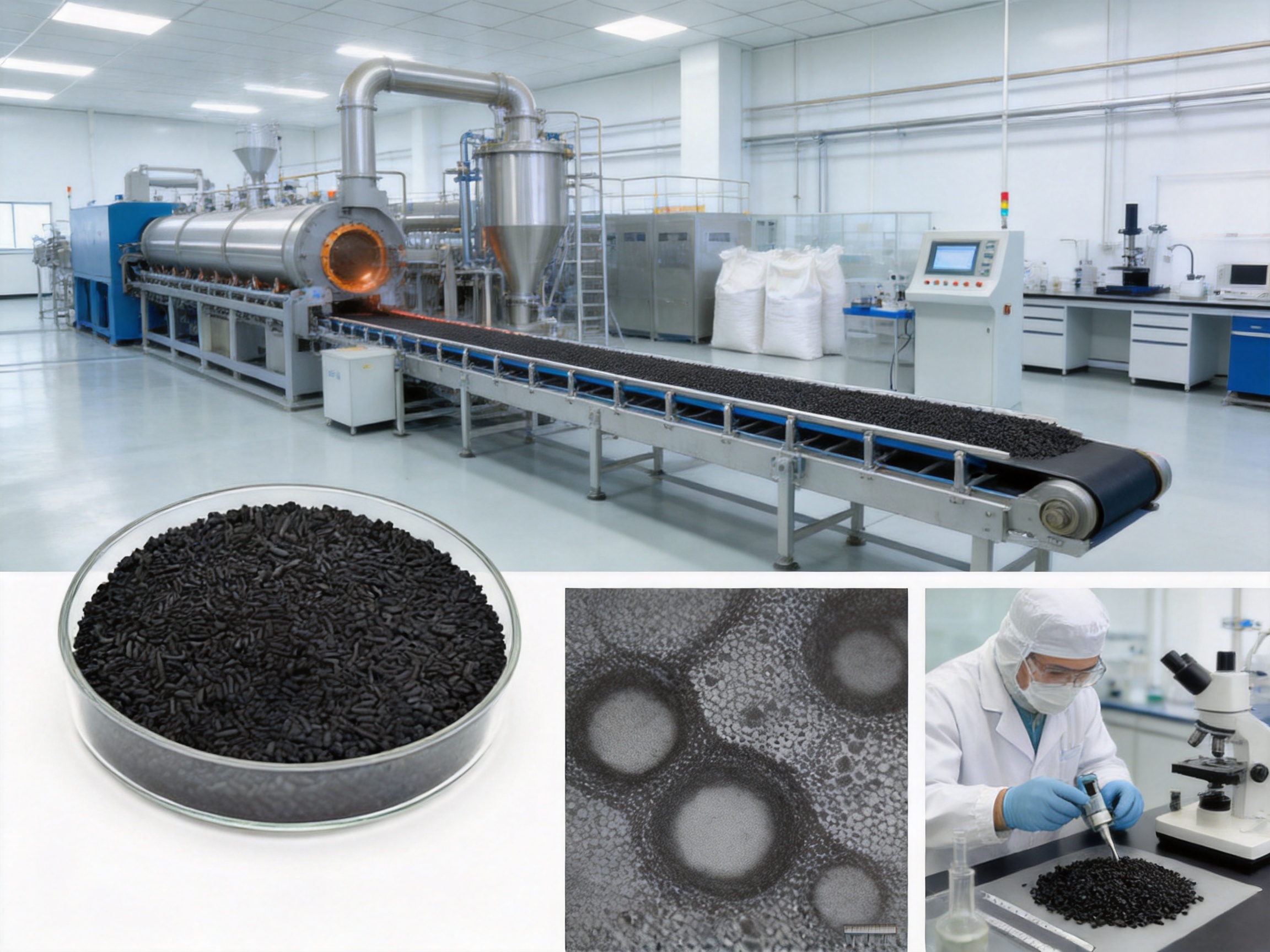
Continuous production equipment is used to reduce manual intervention and improve process repeatability. Compared with heavily manual manufacturing, continuous operation can reduce direct labor requirements and limit the influence of individual operating practices on product quality.
Continuous equipment can also help maintain more consistent residence time, heating conditions, material flow, and processing sequence. These factors are important in carbonization and activation-related operations, where small process differences can affect pore development and adsorption performance.
Automation does not remove the need for quality control. Instead, it creates a more stable production platform that must be supported by process monitoring, equipment maintenance, sampling, and final testing. The combination of continuous equipment and systematic inspection is more valuable than either method alone.
Production Location and Moisture Management
The company’s manufacturing base is located in northern China, where relatively low atmospheric humidity can support production conditions for moisture-sensitive porous materials. Water content in raw materials and ambient air must be carefully considered because excess moisture can occupy micropores, interfere with adsorption, and increase the burden on downstream drying systems.
Moisture management begins with raw-material storage and continues through processing, packaging, warehousing, and shipment. Good practices include protected storage, controlled exposure to ambient air, suitable drying, sealed packaging, and inspection before delivery.
Research and Development Cooperation
The company cooperates in research and development with Jinan Shengquan Group and China University of Mining and Technology. This cooperation focuses on the performance of carbon molecular sieves and related carbon materials.
Research cooperation can support the improvement of pore-size distribution, mechanical strength, adsorption kinetics, regeneration characteristics, and production consistency. It also creates an opportunity to connect industrial-scale manufacturing experience with academic analysis of carbon structure and gas-separation behavior.
The company reports ownership of 21 core patents. These patents form part of the technical foundation for porous-carbon materials, carbon molecular sieve production, and associated applications. Patented technology does not replace independent performance verification, but it demonstrates a sustained effort to develop proprietary process and material capabilities.
Quality Management and Final Equipment Testing
The company holds ISO 9001 certification, providing a formal framework for process documentation, inspection, traceability, corrective action, and continual improvement. For a material used in pressure-cycle equipment, such a quality system is important because performance depends on both the product and the consistency of its production.
A particularly significant quality-control measure is the testing of carbon molecular sieve in a nitrogen generator before shipment. The product is not released solely on the basis of appearance or a single laboratory property. It must be evaluated in the intended application environment, and only material that passes the test is released.
Application testing can reveal performance characteristics that may not be obvious from basic material analysis. These include actual nitrogen purity, production rate, pressure response, cycle stability, air consumption, and the interaction between the adsorbent and the adsorption-tower design.
The company states that approximately 90% of its CMS production reaches CMS-280 grade or higher. This indicates a production system focused on higher-performance material rather than relying primarily on lower-grade output. Buyers should still request the relevant test report and operating conditions for each specific shipment.
Comparison with Less-Consistent Carbon Molecular Sieve
Carbon molecular sieve products from different sources can look similar while performing differently in a PSA generator. The key differences are usually associated with pore structure, adsorption kinetics, particle strength, moisture content, and batch consistency.
Low-cost material may appear attractive when evaluated only by purchase price per ton. However, the total cost of ownership also includes electricity, compressed-air demand, nitrogen losses, replacement frequency, maintenance, downtime, and product quality risk. A material with higher initial cost can be more economical if it provides better nitrogen output and stable operation.
Inconsistent pore-size distribution can cause variations in oxygen adsorption and nitrogen recovery. One batch may deliver the required purity while another batch requires longer adsorption time or produces less nitrogen. Such inconsistency makes it difficult for equipment manufacturers and end users to optimize the PSA cycle.
Weak particles can generate fines during loading, operation, and unloading. Fines may increase pressure drop, block filters, interfere with valves, and reduce the effective void space in the adsorption tower. Mechanical strength and attrition resistance should therefore be considered alongside adsorption capacity.
Insufficient drying can also create problems. Water is strongly adsorbed by porous carbon and may compete with oxygen for active micropore volume. If the feed air is not properly dried, moisture can reduce initial performance and contribute to gradual deterioration.
The CMS series addresses these concerns through controlled raw materials, specialized base materials, continuous production, nitrogen-generator testing, and formal quality management. These measures do not eliminate the need for proper system design, but they provide a stronger foundation for reliable operation than material selection based only on price.
Operating Conditions That Protect Performance
Raw-Air Pretreatment
Clean compressed air is essential for carbon molecular sieve. Oil vapor, liquid water, dust, and organic contaminants can block or contaminate the micropores. Once the micropores are blocked, oxygen diffusion decreases and the separation efficiency of the adsorbent may decline significantly.
Air from an oil-lubricated compressor may contain oil vapor and aerosols. Compression also increases air temperature and can cause water to condense when the air cools. The compressed air should therefore pass through an aftercooler and a suitable purification system, including water separation, oil removal, filtration, and drying.
The supplied technical guidance recommends a dew point below approximately minus 4 degrees Celsius and an oil content below 0.3 parts per million for the air entering the carbon molecular sieve. The air should also be free of harmful organic contaminants. Actual requirements should be confirmed according to the nitrogen generator manufacturer’s design and the selected CMS product.
Air pretreatment is one of the most important differences between a well-performing PSA system and a system that experiences early adsorbent failure. Even a high-quality carbon molecular sieve cannot compensate for continuous oil contamination or excessive moisture.
Adsorption Pressure
Higher adsorption pressure generally increases the adsorption capacity for oxygen and can improve nitrogen production. However, excessive pressure increases compressor power consumption, equipment requirements, and mechanical stress. A practical operating pressure must balance productivity and energy use.
For atmospheric-pressure regeneration systems, an adsorption pressure of approximately 0.6 to 0.8 MPa is commonly considered suitable. The performance data for the CMS series are presented at approximately 0.75 to 0.80 MPa. The optimal pressure for a particular installation depends on compressor efficiency, tower dimensions, cycle design, purity target, and product-gas pressure.
Adsorption Temperature
Adsorption is generally exothermic. As the temperature of the adsorbent bed increases, adsorption capacity may decrease. Lower and more stable inlet-air temperature is therefore favorable for nitrogen production.
The supplied guidance recommends an ambient temperature at or below approximately 15 degrees Celsius for optimal nitrogen-generator performance. This should be interpreted as an operating recommendation associated with the stated performance data rather than a universal limit for every PSA installation. System designers should establish the actual allowable temperature range based on equipment specifications and local conditions.
Aftercoolers, dryers, ventilation, and appropriate equipment-room design can help prevent excessive temperature increases. Stable temperature also improves the repeatability of the PSA cycle and makes it easier to maintain consistent product purity.
Pressure Equalization
Pressure equalization transfers gas from an adsorption tower that has completed its production step to another tower undergoing repressurization. Equalization can occur through the top, bottom, or both directions, depending on the PSA design.
Correct equalization reduces energy loss and improves the use of nitrogen-rich gas that remains inside the tower. It can also reduce the pressure shock experienced by the carbon molecular sieve. Excessive pressure shock may accelerate particle movement and pulverization.
The supplied operating guidance indicates that an equalization time of approximately one to three seconds is generally selected. The exact value should be optimized through equipment testing because it depends on valve response, tower volume, pressure difference, piping arrangement, and control logic.
Cycle-Time Optimization
Cycle time influences both purity and production. If the adsorption step is too long, the mass-transfer zone may move too far through the bed and oxygen may begin to appear in the product stream. If the step is too short, the adsorbent capacity may not be fully utilized and the system may lose production efficiency.
Regeneration must remove the adsorbed oxygen and other contaminants sufficiently before the next adsorption step. Incomplete regeneration reduces available capacity, while excessive regeneration can waste product gas or increase energy consumption.
The best cycle is determined through testing rather than by selecting a fixed time for every application. The CMS grade, tower geometry, feed-air conditions, operating pressure, target purity, and product demand must all be considered together.
Applications Across Multiple Industries
Chemical Processing
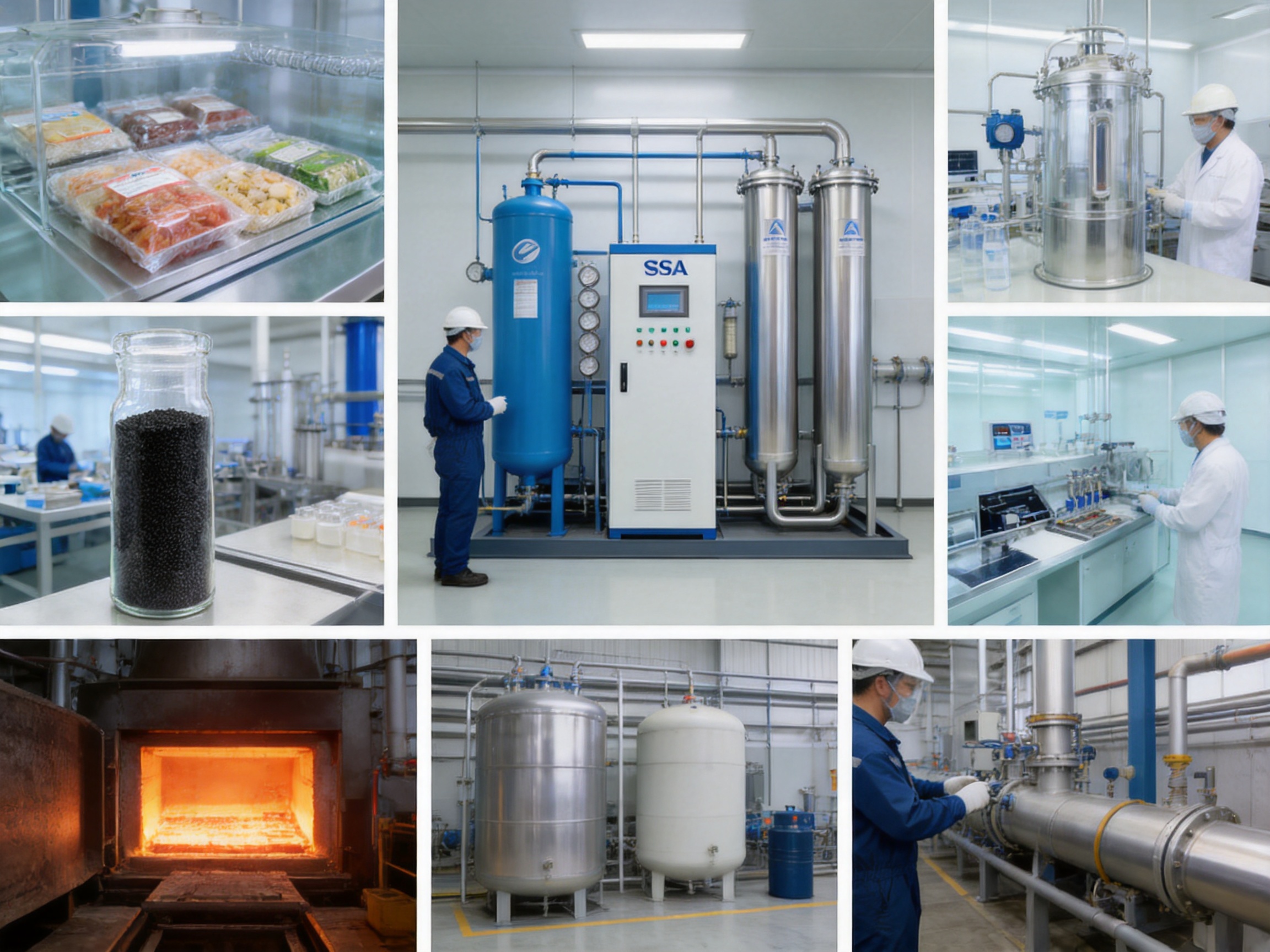
Nitrogen is used in chemical plants for inerting vessels, protecting flammable materials, purging pipelines, and reducing the risk of oxidation. PSA-generated nitrogen can be produced on demand near the point of use, helping chemical facilities reduce dependence on delivered gas.
The required purity varies by process. Some applications need a moderate-purity nitrogen blanket, while oxygen-sensitive reactions may require much higher purity. The CMS product series allows the generator to be matched to the process requirement.
Oil and Gas
Oil and gas facilities use nitrogen for pipeline purging, tank blanketing, pressure testing, well servicing, and equipment maintenance. Reliable nitrogen production is particularly valuable at remote locations where gas deliveries are difficult or expensive.
In these environments, the generator and adsorbent may be exposed to variable temperatures, demanding duty cycles, and challenging maintenance conditions. Strong particle quality and dependable feed-air pretreatment are important for maintaining stable performance.
Electronics Manufacturing
Electronics manufacturing often requires a controlled atmosphere with low oxygen content and limited contamination. Nitrogen is used in soldering, reflow processes, component storage, semiconductor manufacturing, and inert production environments.
Applications with strict oxygen limits may benefit from the higher-performance CMS-280 or CMS-330 grades, subject to confirmation through generator testing. Moisture control and filtration are especially important because electronic processes can be sensitive to contamination.
Food Packaging
Nitrogen is used in modified-atmosphere packaging to displace oxygen and help protect food quality. It can reduce oxidation, preserve texture, and improve package stability for selected products.
Food applications often require reliable gas purity and uninterrupted supply. On-site PSA generation can provide a continuous nitrogen source while reducing the need to store high-pressure cylinders or liquid nitrogen.
Pharmaceutical Production
Pharmaceutical facilities use nitrogen for blanketing, drying, packaging, solvent protection, and process control. The appropriate purity level depends on the specific process and applicable quality requirements.
Because pharmaceutical production places strong emphasis on documentation and contamination control, the nitrogen generator should be supported by validated operating procedures, air-quality monitoring, filtration, and scheduled maintenance.
Coal and Mining
Nitrogen can be used in coal-related operations for inerting, fire prevention, storage protection, and gas-control applications. On-site generation can be useful where a stable gas supply is required over extended periods.
Metal Heat Treatment
Heat-treatment furnaces may use nitrogen to reduce oxidation and create a controlled atmosphere around metal components. The required nitrogen flow and purity depend on furnace size, process temperature, material type, and production speed.
Cable Manufacturing and Transportation
Nitrogen is used in cable production, storage, transportation, and certain filling or drying operations. It may also be used to protect products and equipment from moisture and oxidation during shipment.
Selection Guidance for Buyers and Equipment Manufacturers
The correct CMS model should be selected according to the complete nitrogen-generation target, not simply the desired purity. Buyers should define nitrogen flow, purity, outlet pressure, operating hours, ambient conditions, available compressed air, and acceptable energy consumption.
A high-purity application may require more adsorbent, longer cycle control, greater air consumption, or a larger generator. A lower-purity application may achieve a significantly higher flow rate from the same quantity of carbon molecular sieve. The most economical solution is usually the one that meets the actual process requirement without excessive purity or capacity margins.
Important technical information to request from a supplier includes particle size, bulk density, moisture content, mechanical strength, attrition resistance, adsorption performance, recommended pressure, test conditions, packaging method, and storage requirements.
Customers should also ask whether the reported production rate is measured per ton of adsorbent, per adsorption tower, or per complete generator. Units such as Nm³/h·t must be interpreted consistently. Test data should identify nitrogen purity, adsorption pressure, cycle time, air temperature, feed-air quality, and product-gas conditions.
For equipment manufacturers, consistency between batches is particularly important. A generator control program optimized with one adsorbent may not perform identically with a material having a different pore structure or adsorption rate. Long-term cooperation with a stable supplier can simplify system design, commissioning, and after-sales service.
Packaging should protect the adsorbent from moisture and physical damage. Carbon molecular sieve should be stored in a dry environment, with bags or containers sealed until loading. During filling, excessive dropping from height should be avoided because impact can generate fines or damage particles.
Why Integrated Manufacturing Matters
The performance of a carbon molecular sieve is the result of multiple connected stages. Raw-material selection influences carbon structure. Carbon structure influences pore development. Pore development influences oxygen diffusion. Particle formation influences pressure drop and attrition. Drying and packaging influence initial operating condition. Final generator testing confirms how these properties work together.
A supplier that controls more of this chain can identify and correct problems earlier. Integrated production also facilitates product customization. For example, a customer may require a specific particle size, a particular purity-flow balance, or performance under a defined PSA cycle. Such requirements are easier to address when the supplier has control over raw materials, processing, testing, and technical feedback.
Anhui Zhuoxu New Material Technology Co., Ltd. combines porous-carbon production, carbon molecular sieve manufacturing, continuous equipment, research cooperation, quality management, and generator-based testing. This integrated approach supports the company’s ability to supply standard grades and discuss customized requirements.
The company serves customers in China and exports to Asia, South America, the Middle East, and Southeast Asia. Its broader material portfolio also includes resin-based porous carbon for emerging applications such as sodium-ion batteries and supercapacitors. This cross-industry experience contributes to continued development in pore-structure control and carbon-material engineering.
Frequently Asked Questions
What is carbon molecular sieve?
Carbon molecular sieve is a porous carbon adsorbent engineered to separate gases according to differences in molecular diffusion and adsorption behavior. In PSA nitrogen generators, it adsorbs oxygen more rapidly than nitrogen, allowing nitrogen to be collected as the product gas.
What is the difference between CMS-240, CMS-260, CMS-280, and CMS-330?
The four models represent different performance grades in the product series. Under the reference conditions supplied, CMS-330 provides a higher production rate than CMS-240 at the same listed purity levels. The appropriate choice depends on nitrogen purity, required flow, air consumption, equipment design, and operating conditions.
Can carbon molecular sieve produce 99.999% nitrogen?
The reference performance data for CMS-240, CMS-260, CMS-280, and CMS-330 include 99.999% nitrogen purity. Actual purity depends on the complete PSA system, including tower design, cycle timing, air pretreatment, pressure, temperature, instrumentation, and maintenance.
Why is air drying important?
Water can occupy adsorption sites and interfere with oxygen-nitrogen separation. Excess moisture may reduce capacity, increase energy consumption, and shorten adsorbent life. Compressed air should be cooled, separated, filtered, oil-removed, and dried before entering the adsorption towers.
What happens if oil enters the adsorption tower?
Oil vapor and aerosols can contaminate or block the micropores of carbon molecular sieve. This may reduce oxygen adsorption, decrease nitrogen purity, increase air consumption, and cause irreversible performance loss. Effective oil removal is therefore essential.
What adsorption pressure is recommended?
The reference data are based on an adsorption pressure of approximately 0.75 to 0.80 MPa. General guidance for atmospheric regeneration systems places the operating range around 0.6 to 0.8 MPa. The final pressure should be established according to the generator design and energy-efficiency requirements.
How does temperature affect CMS performance?
Adsorption is generally exothermic, so increasing temperature can reduce adsorption capacity. Stable, lower inlet-air temperature is usually beneficial. The supplied guidance recommends an ambient temperature at or below approximately 15 degrees Celsius for optimal performance under the stated conditions, but actual limits depend on the generator design.
How long can carbon molecular sieve last?
Service life depends on air cleanliness, moisture control, pressure shocks, cycle design, particle handling, operating hours, and maintenance. Clean and properly dried air, controlled equalization, and careful loading can help extend service life. A supplier should provide replacement recommendations based on the application.
Why should CMS be tested in a nitrogen generator before shipment?
Application testing confirms how the adsorbent behaves under cyclic pressure and regeneration conditions. It can verify nitrogen purity, production rate, air consumption, and operating stability more realistically than a single laboratory measurement.
Is a higher CMS grade always the best choice?
Not necessarily. A higher grade may provide greater production capacity, but the best choice depends on the required purity and flow. Selecting a grade substantially above the actual process requirement may increase purchase cost without producing a proportional economic benefit. The model should be selected through a complete system evaluation.
How should CMS be stored?
Carbon molecular sieve should be stored in a dry, clean, protected area. Packaging should remain sealed until loading. Exposure to humid air should be minimized, and damaged or open packages should be inspected before use.
Can the product be customized?
Customization may be discussed according to particle size, purity-flow target, operating pressure, packaging, application, and generator design. Technical requirements should be provided in detail so that the supplier can evaluate the appropriate material and test conditions.
Conclusion
Carbon molecular sieve is the core separation material that determines much of the performance of a PSA nitrogen generator. The CMS-240, CMS-260, CMS-280, and CMS-330 series provides a range of options for adjustable nitrogen purity and production, with reference capacities extending from general-purpose nitrogen generation to high-purity industrial applications.
The main benefits of the series include selective oxygen adsorption, controlled micropore structure, high adsorption capacity, flexible purity and flow performance, compatibility with continuous PSA operation, and potential cost advantages over delivered or cryogenic nitrogen in suitable applications.
Its competitive value is supported by more than the material specification alone. Integrated porous-carbon supply, specialized base materials, continuous manufacturing equipment, low-moisture production conditions, research cooperation, ISO 9001 certification, and final testing in nitrogen generators provide a process foundation for stable quality.
For the best results, the carbon molecular sieve must be matched with clean and dry compressed air, appropriate adsorption pressure, controlled temperature, optimized cycle timing, and careful tower operation. When these conditions are properly managed, the CMS series can support dependable nitrogen generation across chemical, oil and gas, electronics, food, pharmaceutical, mining, cable, metal-treatment, transportation, and storage applications.
References
1. Anhui Zhuoxu New Material Technology Co., Ltd., Carbon Molecular Sieve Product Information and Reference Performance Data.
2. ISO 9001, Quality Management Systems—Requirements.
3. Ruthven, D. M., Principles of Adsorption and Adsorption Processes.
4. Yang, R. T., Gas Separation by Adsorption Processes.
5. Perry’s Chemical Engineers’ Handbook, sections on adsorption, gas separation, and compressed-air treatment.
6. General industrial practice for pressure swing adsorption nitrogen-generation systems, air pretreatment, pressure equalization, and adsorbent handling.
Product: Carbon Molecular Sieve (CMS)



 E-mail
anhuilisa@126.com
 Phone
+86 18603224420
 Address
No. 26 Kunshan Road, Xuanzhou Economic Development Zone, Liqiao Town, Xuanzhou District, Xuancheng City, Anhui Province, P.R.China
Copyright Anhui Zhuoxu New Material Technology Co., Ltd. All rights reserved.
 Carbon Molecular Sieve Manufacturer Carbon Molecular Sieve Supplier